Aufbruch
Direction and Piano Meesun Hong Coleman
Direction and Violin
Britten, Hong Coleman and Mendelssohn
Works by Beethoven, Boccherini, Mendelssohn and others
Ludwig van Beethoven (1770–1827)
Praeludium und Fuge, Hess 40/Op. 137
Luigi Boccherini (1743–1805)
Cello Concerto No. 2 in A major, G.475
Carl Philipp Emanuel Bach (1714–1788)
Cello Concerto in A major, Wq. 172
Camille Saint-Saëns (1835–1921)
Sarabande Op. 93 No. 1 for string orchestra
Felix Mendelssohn Bartholdy (1809–1847)
String Quintet No. 2 in B-Flat major, version for string ensemble
— Programme without interval —
Running time: approx. 1.5 hours
Prelude and Fugue: that makes one think of Johann Sebastian Bach. But of Ludwig van Beethoven? He indeed wrote a prelude for string quintet in his older age. Its fugue remained a fragment, which Beethoven later replaced with a new fugue. And already we have a prelude with fugue, created in 1817.
Camille Saint-Saëns also looks to the past when he, in 1892, wrote several dances in the old style, like the dreamily flowing Sarabande. They were intended to complement Saint-Saëns' new edition of Marc-Antoine Charpentier's Comédie ballet, based on Molière's Le malade imaginaire.
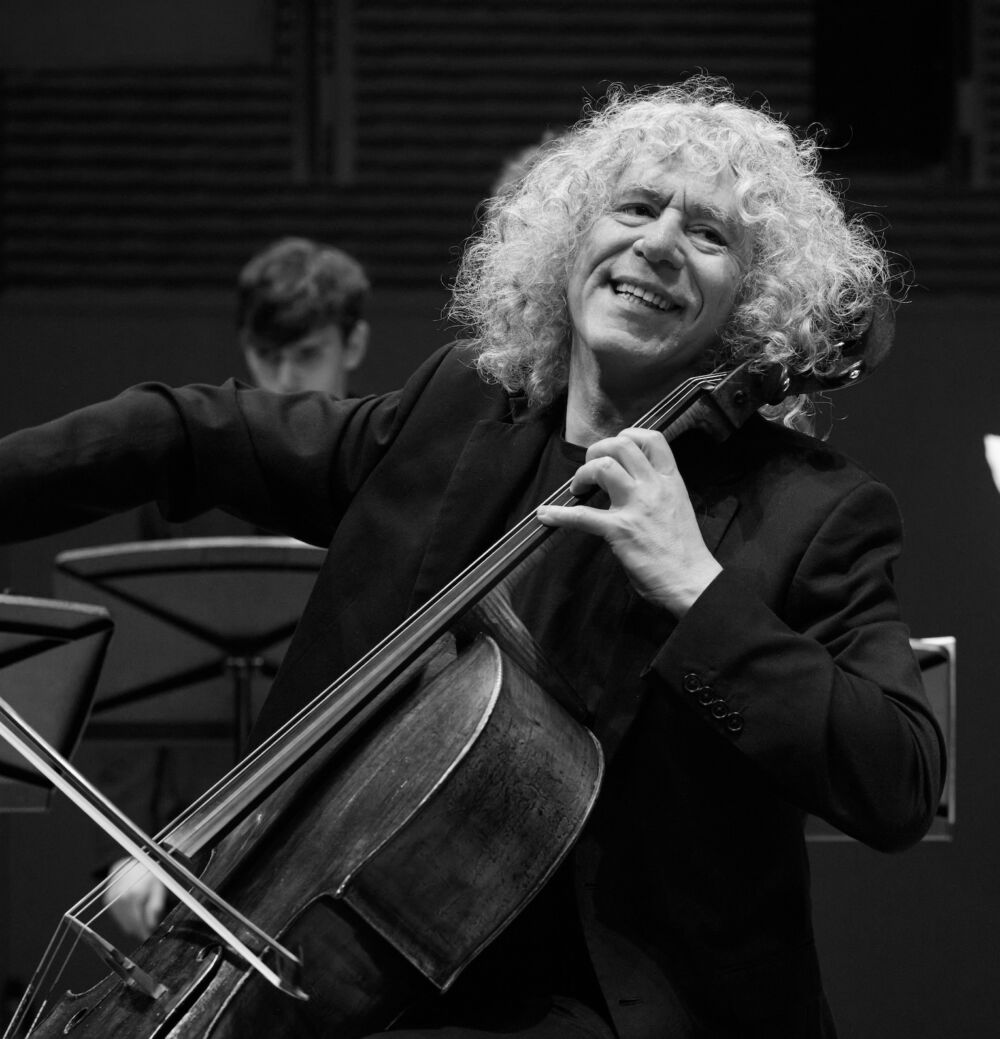
Complement or not? Yves Gérard's catalogue of Boccherini's cello concertos lists eleven. With the Cello Concerto in A Major G 475: voilà, a twelfth! For Steven Isserlis, Artistic Partner of CAMERATA BERN and a self-confessed fan of this composer, it is clearly the best Boccherini: "distinguished and amiable", as he says.
And a second cello concerto sails through this programme. Bach's son, Carl Philipp Emanuel, is that at its finest: the orchestra, surging; the solo voice, noble, and not thrown off track for a second by the youthful exuberance of the tutti.
Youthfulness and noblesse, then—both together in Mendelssohn. In his Second String Quintet in B-Flat major, traditionally classical forms capture its effervescent fantasy. The best of both worlds.
Ticket sales are through the organiser.