
Spiez
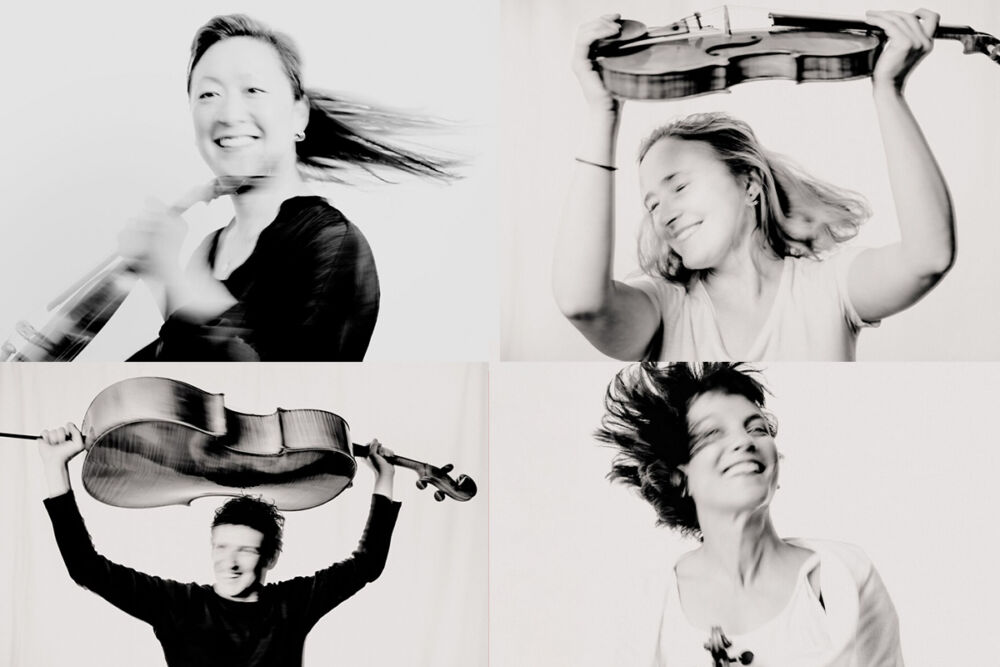
Violin Sonja Starke
Violin Anna Puig Torné
Viola Thomas Kaufmann
Cello
Haydn, Schumann, Folk Music
Bartók, Kodály/Veress, Mendelssohn and PatKop
Felix Mendelssohn Bartholdy (1809–1847)
Violin concerto in D minor MWV 03
PatKop (*1977)
Danses Macabres
—
Zoltán Kodály (1882–1967)
Marosszék Dances arranged for CAMERATA BERN by Sándor Veress
Béla Bartók (1881–1945)
Divertimento for string orchestra Sz.113 BB.118
Programme with interval
Running time: approx. 2 hours
It is a work full of youthful energy and emotional immediacy: Felix Mendelssohn wrote his Violin Concerto in D minor when he was just 13 years old. For Artistic Partner Patricia Kopatchinskaja, it is much more than a youthful work; it is a matter close to her heart. “As long as I can move, I will play this concerto,” she says. “Because it is a conversation with a person who does not yet know exactly, but feels infinitely, and who pursues this feeling without fear or hesitation.”
Kopatchinskaja also contributes her own new composition to the program. Her Danses Macabres gnash their teeth. You can hear the skeletons rattling, and laughing Death has put on a frozen mask: macabre dances for a macabre time. Sándor Veress' arrangement of Zoltán Kodály's Marosszék Dances contrasts this with vitality, though tinged with melancholy.
Béla Bartók's Divertimento is the music of a relaxing summer in the Swiss chalet of his patron Paul Sacher. It’s full of lively dance rhythms, and echoes Hungarian, Romanian, and Viennese styles. Only the middle section, a funeral march, reflects on the other side of such exuberance.
Ticket sales are through the organiser.